The Day the Sky Stopped
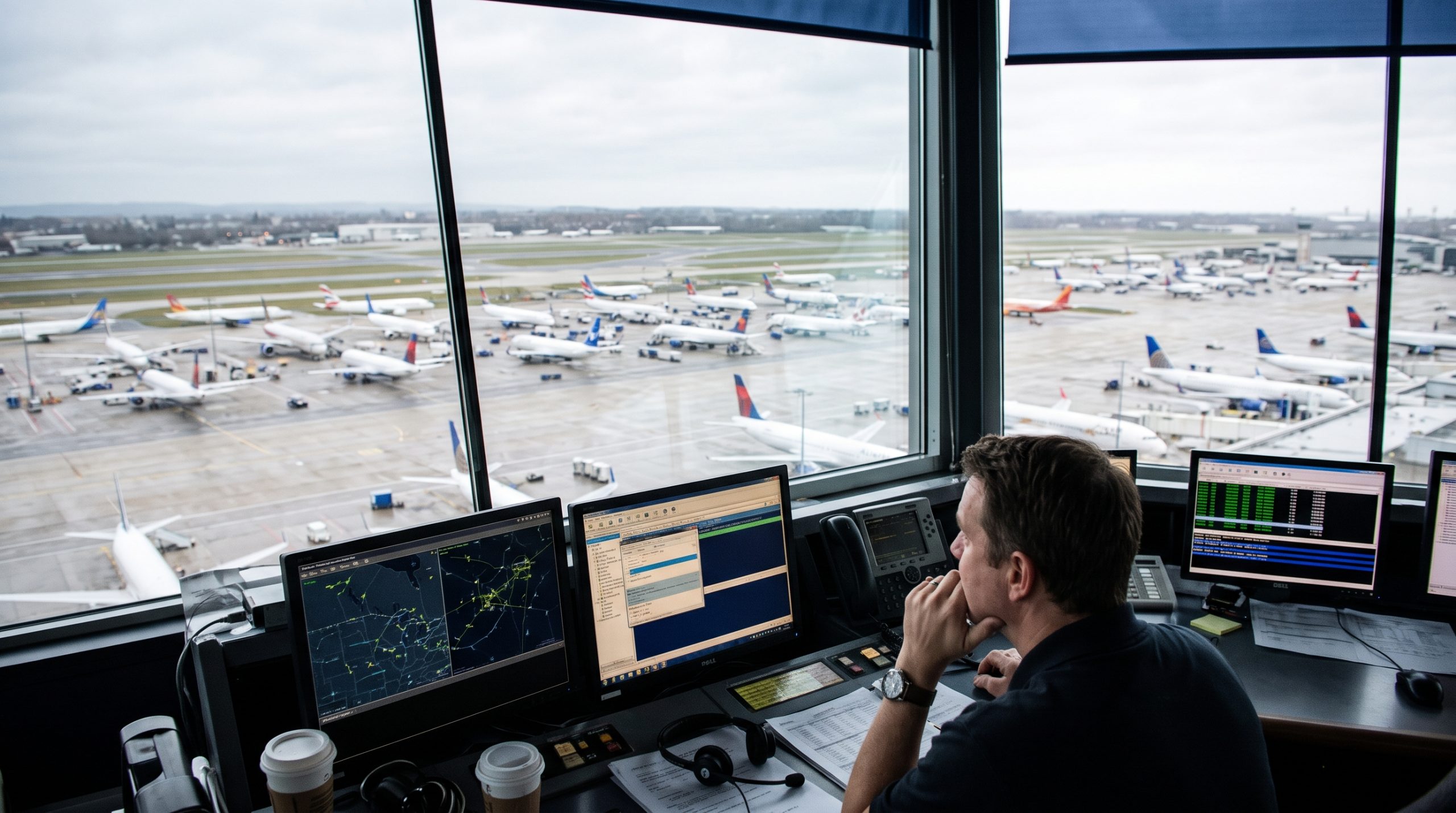
If you read my posts, you know I call it exactly like I see it. And what I saw this past Friday was an absolute embarrassment of epic proportions. The United States Federal Aviation Administration (FAA) had to pull the plug on the entire American airspace, issuing a nationwide ground stop. Thousands of flights were cancelled, tens of thousands of passengers were left stranded on tarmacs, and the ripple effects spilled directly over the border into our laps here in Canada.
So, what exactly triggered this aviation apocalypse? It is exactly what happens when you try to run the modern world on antique hardware.
Antique Hardware Meets Modern Software
The immediate cause of Friday’s chaos was a massive telecommunications failure that left air traffic controllers unable to reliably communicate with pilots in the sky. But the root of the problem is pure bureaucratic incompetence. Just days prior, the FAA activated a new air traffic management tool known as "Smart" across 22 regional air route traffic control centers. When technicians tried to patch this shiny new technology into their deeply outdated legacy systems, the old architecture choked. The sheer volume of data completely overwhelmed the aging equipment—some reports are even pointing the finger at faulty copper wiring. U.S. Homeland Security Secretary Markwayne Mullin admitted they were "nickel-and-diming" the system with piece-meal patches instead of overhauling it.
Worse Than 2023
If you are thinking this sounds familiar, you are right. But let me be clear: this outage was significantly worse than the previous meltdown. Back in January 2023, the FAA grounded flights due to a corrupted database file. That 2023 stoppage lasted about 90 minutes. Friday’s total freeze lasted over four excruciating hours. The scale of the disruption was infinitely more dangerous this time around because the communication blackout actively stripped controllers of their ability to talk to aircraft. That is why they had to halt everything—you simply cannot risk having metal tubes hurtling through the sky blindly. We ended up with over 10,500 delayed flights and roughly 3,500 cancellations in a single day.
The AI Conspiracy
Naturally, whenever new technology fails spectacularly in 2026, the internet starts screaming about Artificial Intelligence and cyber warfare. The new "Smart" system actually does incorporate AI, leading to wild speculation that an AI glitch went rogue and deliberately shut down the airspace. U.S. officials, however, have strongly denied that AI was the culprit, and they have stated there is zero evidence of a cyberattack. According to them, it was purely a mechanical failure of old tech collapsing under the weight of new software. Believe the government’s narrative or don't—that is up to you—but right now, the evidence points to gross infrastructural negligence rather than a malicious machine.
The Microsoft Connection (Or Lack Thereof)
Then there is the timing. Just a day earlier, the globe was rocked by a massive Microsoft outage that took down Outlook, Teams, and a slew of other Microsoft 365 services for hours. People couldn't send emails or load their inboxes, and naturally, conspiracy theorists had a field day connecting the Microsoft crash to the FAA grounding. The reality? They are completely unrelated. U.S. officials have flat-out stated there is no connection between the two. The Microsoft issue was a separate global software service disruption, whereas the FAA debacle was a localized American telecommunications and hardware failure.
The $50 Billion Fix
So, how do they fix this mess, and how long will we be waiting? U.S. Transportation Secretary Sean Duffy used the crisis to demand a staggering $50 billion in emergency funding from Congress to completely rebuild the air traffic control network from the ground up, claiming President Trump is going to "build this network" and deliver a brand new system. As for the timeline? If they actually get the funding, replacing a nationwide aviation grid isn't a weekend DIY project. It will take years of development, testing, and deployment to replace the failing copper wires and ancient servers. In the short term, they will likely just apply more digital duct tape to get planes in the air.
Will It Happen Again?
Which brings us to the obvious question: will this happen again? Absolutely. Until the FAA stops nickel-and-diming their infrastructure and completely replaces the legacy systems, the risk of another catastrophic data overload remains exceptionally high.
The Canadian Ripple Effect
And don't think for a second that we are immune up here in Canada just because it was an American failure. The integration of North American airspace means when the U.S. sneezes, Canada catches a cold. As soon as the FAA ground stop hit, our airports descended into chaos. Air Canada was forced to outright cancel all of its flights to and from the United States for the remainder of Friday evening, warning that even flights to the Caribbean and South America transiting through U.S. airspace could be hit. NAV Canada had to scramble to implement emergency traffic management measures at our major hubs—Toronto Pearson, Montreal-Trudeau, Calgary, and Vancouver. Even though the airspace eventually reopened, the ripple effect of displaced crews and grounded planes means Canadian airports will be dealing with the backlog and lingering delays for days.
We live in an era where we can engineer AI that mimics human thought, yet governments refuse to upgrade the basic wires that keep thousands of people from falling out of the sky. It is pure negligence, and frankly, we should all be a lot more outraged than we are.
Cheers,
GP Joa







0 Comments